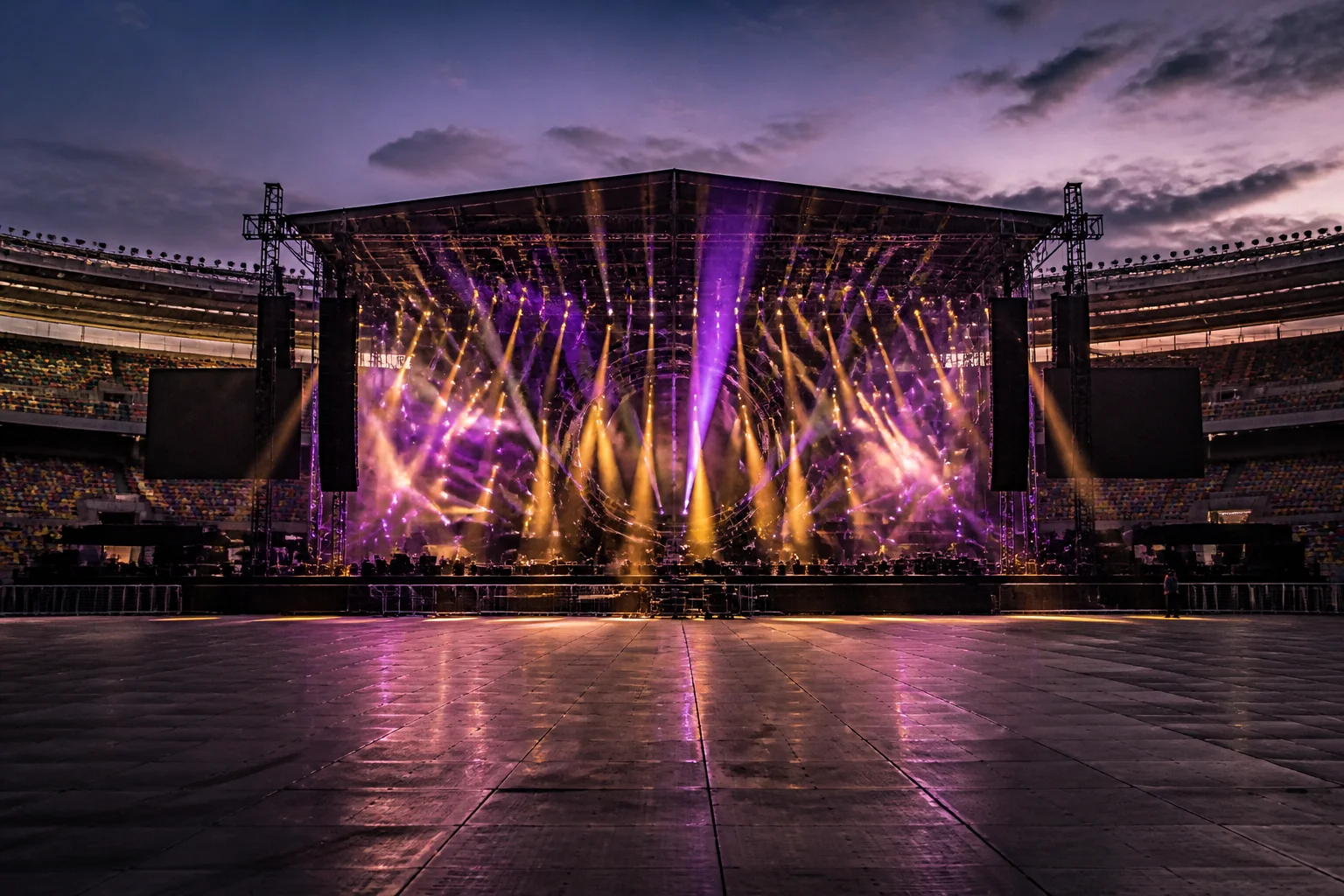
Architectural Dimensions of the Modern Stadium Stage
Concert stages on monumental world tours function as self-contained architectural ecosystems designed to bridge vast distances between performer and audience. Modern stadium architecture utilizes elongated catwalks stretching over seventy yards into general admission floors, transforming massive concrete bowls into personal performance rooms. The primary proscenium stage houses towering multi-layered LED displays capable of rendering cinematic vistas with photorealistic clarity, while hydraulic platforms elevate performers above eye-level obstacles to maintain constant sightlines across all tiers.
Rather than relying solely on static backdrops, contemporary touring structures embed digital panels directly into floor surfaces, enabling dynamic lighting effects that sync with choreography in real time. The integration of mechanical lifts, sub-stage rapid-transit pathways, and hidden prop compartments allows the entire staging environment to transform seamlessly between sonic eras without disrupting the momentum of a marathon setlist.
Live stadium performances are no longer just amplified concerts; they are multi-sensory theatrical environments where precision mechanics and intimate storytelling coexist.
— Emily White, Live Production Analyst
Engineering Dynamics and Stage Automation
Engineering a stadium production that travels across hemispheres demands unprecedented structural modularity and technical redundancy. The staging footprint accommodates variable ground conditions and differing venue dimensions through scalable trussing frameworks, while advanced automated software synchronizes pyrotechnics, video cues, and automated lighting trusses with split-second precision.
Acoustic Choreography and Set Flow
Balancing thunderous pop anthems with stripped-back acoustic compositions requires meticulous sonic engineering. Acoustic energy in open-air arenas dissipates rapidly or reflects off concrete upper decks; delay towers positioned across the floor counteract latency, delivering pristine vocal reproduction to every seat. Sound designers employ custom microphone equalization profiles tailored specifically for rapid vocal transitions between driving synth-bass drops and delicate fingerpicked guitars.
The acoustic segment of the show represents a deliberate structural pause in high-octane production values. Stripping away heavy backing tracks and digital accompaniment, this intimate window highlights unadorned songwriting craftsmanship. It demonstrates how intentional pacing and spatial minimalism within a cavernous stadium can evoke the warmth of an intimate living-room gathering.
The Benchmark for Next-Generation Live Concerts
The theatricality pioneered across recent stadium cycles has permanently altered audience expectations for live music events. By synthesising Broadway-caliber scene design, narrative sequencing, cinematic visuals, and athlete-level physical endurance, these tours establish a durable technical template that defines what a modern stadium spectacle can accomplish in the twenty-first century.
Explore Live Concert Itineraries
Review comprehensive venue logistics, historical tour dates, and stadium performance logs.
Related Chapters


Community Insights
Sam
Fan ReaderHer stage presence is unmatched.
Leave a Thoughtful Comment